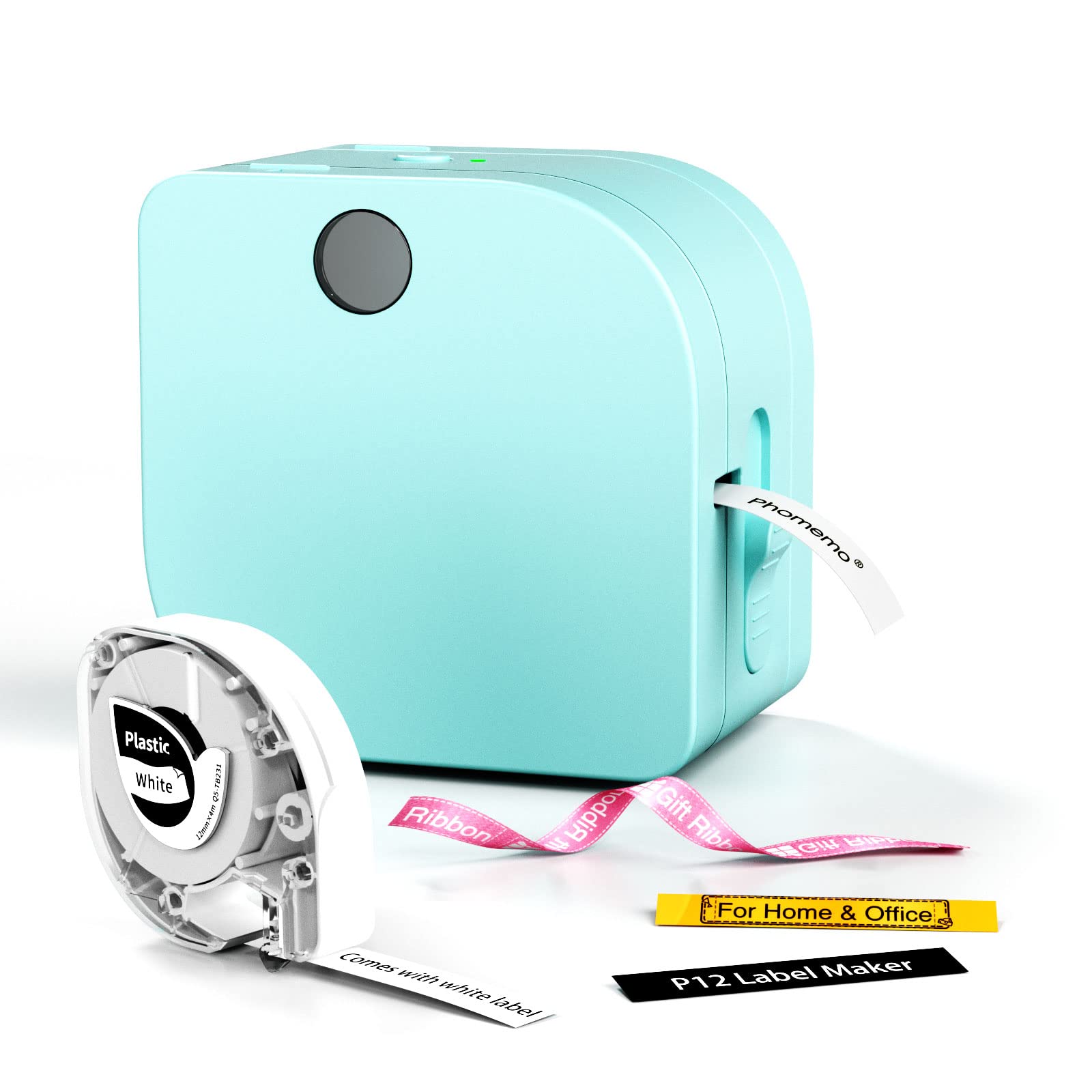
The Phomemo P12 combines everyday label making with thermal-transfer ribbon printing, giving home organizers, teachers, and crafters more ways to identify and decorate items.
These phomemo ribbon printer reviews focus on its flexible media, phone-based design tools, and the tradeoffs to consider before buying.
Phomemo P12 Review Summary
The quick verdict
2,000+ ratings
Read Amazon ReviewsPhomemo P12
A fit for phone-first organizers and teachers who want everyday labels plus decorative ribbon printing for crafts and gifts.
- Supports thermal labels and thermal-transfer media, including ribbons and iron-on labels.
- Prints at 203 DPI and includes a built-in cutter.
- Connects to iOS and Android phones through Bluetooth and an app.
- The app offers more than 15 languages, over 90 fonts, and over 1,000 borders, plus symbols and templates.

Pros
- Dual support for everyday thermal labels and decorative or iron-on media broadens its uses.
- A large selection of app fonts, borders, and symbols allows labels to be tailored to different settings.
Consider before buying
- The workflow depends on an iOS or Android phone, Bluetooth, and the companion app.
- The six AAA batteries are not included, so portable use requires buyers to supply them.
Read the full review summary
The P12 stands out for supporting both thermal labels and thermal-transfer media, including ribbons and iron-on labels.
That gives it a broader role than a basic label maker: routine jobs such as marking food dates and organizing classroom supplies can sit alongside gift wrapping, clothing labels, and small craft projects.
Its 203 DPI resolution and built-in cutter support straightforward label creation, while the app provides a large set of fonts, borders, symbols, and templates.
This is best suited to someone comfortable creating labels from an iOS or Android phone and willing to choose media for the job.
USB-C power can support longer sessions near an outlet, while six AAA batteries offer a portable option.
The main buying consideration is the media distinction: thermal-transfer options are presented for more durable applications, while ordinary thermal labels cover daily organization. Check that the specific label or ribbon format you want is compatible before choosing.
The buying factors
Phomemo P12 Scorecard
Editorial scores reflect listed features and buyer fit; they are not laboratory measurements or customer ratings.
Media versatility
Supports thermal labels alongside thermal-transfer labels, ribbons, and iron-on options, enabling both practical labeling and decoration.
App design tools
The phone app offers more than 15 languages, 90+ fonts, 1,000+ borders, symbols, templates, and text, barcode, Excel import, scanning, OCR, and voice tools.
Everyday organization fit
Its described uses span kitchen and storage labels, office tags, classroom names, and household sorting.
Power flexibility
USB-C power suits use near an outlet, and the alternative six-AAA setup supports carrying it away from a plug.
Output detail
The 203 DPI resolution is suitable for text-led labels and barcode designs, though the product description gives no broader print-quality detail.
Ease of setup
Bluetooth pairing through the app and an included cutter simplify the workflow, but creating labels depends on a compatible phone and app.
Key Features and Specifications of Phomemo P12
- Supports thermal labels and thermal-transfer media, including ribbons and iron-on labels.
- Prints at 203 DPI and includes a built-in cutter.
- Connects to iOS and Android phones through Bluetooth and an app.
- The app offers more than 15 languages, over 90 fonts, and over 1,000 borders, plus symbols and templates.
- Label creation tools include text, barcode, Excel import, scanning, OCR, and voice recognition.
- Can use USB-C power or six AAA batteries; the batteries are not included.
Pros and Cons of Phomemo P12
Pros
- Dual support for everyday thermal labels and decorative or iron-on media broadens its uses.
- A large selection of app fonts, borders, and symbols allows labels to be tailored to different settings.
- USB-C and AAA battery power give buyers two ways to operate it.
- The built-in cutter helps finish labels during the creation process.
Consider before buying
- The workflow depends on an iOS or Android phone, Bluetooth, and the companion app.
- The six AAA batteries are not included, so portable use requires buyers to supply them.
- Different media serve different jobs; buyers should confirm that the roll or ribbon they plan to use fits the intended application.
Who Should Buy Phomemo P12?
Good fit
Consider the P12 if you want one compact label maker for household organization and occasional classroom or office labeling, with the option to make more decorative projects.
Food date markers, storage labels, personal-item tags, and reminders all fit the everyday use described for it.
It is also a reasonable choice for a teacher or crafter who values ribbon and iron-on media alongside regular labels.
The app’s borders, fonts, symbols, and templates offer room to style labels, while barcode and Excel import features may help when a project involves repeated or structured information.
Before buying, decide which media matters most. Check the available roll or ribbon format for your project, and consider whether you will mainly use it at a desk with USB-C power or carry it with AAA batteries.
Who should skip it
Look elsewhere if you need to create and print labels without relying on an iOS or Android phone and app; the described connection uses Bluetooth through the app.
This may not suit a buyer who only needs a very basic label maker and has no use for multiple media types or the app’s design tools. A simpler option could be easier to match to that routine.
How the Phomemo P12 Fits Labeling and Craft Work
Everyday labels and specialty media
The P12’s defining feature is the split between standard thermal labeling and thermal-transfer media.
The description positions ordinary thermal labels for routine kitchen, refrigerator, and home organization jobs, while thermal-transfer labels are intended for uses such as clothing, bathrooms, dishwashers, outdoor settings, and industrial environments.
That breadth is useful when a household or classroom needs more than one kind of label, but the media choice matters: select a format intended for the surface and conditions involved.
App-based design workflow
Bluetooth connects the printer to a phone, where the app supplies templates and design tools.
Fonts, borders, symbols, and language support let users shape labels for different rooms or projects; barcode, Excel import, scanning, OCR, and voice recognition add ways to build content.
These tools may be especially useful when labels need consistent formatting or when text starts in another source. Buyers should be comfortable designing from a phone before making this their main label workflow.
Power choices for desk or travel
USB-C power is the practical choice for longer use in a fixed workspace, while six AAA batteries offer an alternative when carrying the printer away from an outlet.
Since batteries are not included, a buyer planning mobile use should account for that separately.
The two power approaches make the P12 easier to adapt to different settings, though the best option depends on where and how often labels will be made.
Who gets the most from it
The combination of household, school, office, and craft applications makes the P12 most compelling for someone who will use several of its functions.
A person who only prints occasional plain labels may not benefit from its broad template library or specialty media support.
For a teacher or home organizer who also labels clothing or decorates gifts, those extra capabilities provide a more distinctive reason to choose it.
Alternatives to Phomemo P12
Battery-focused alternative
14,000+ ratings
Read Amazon ReviewsNIIMBOT D110
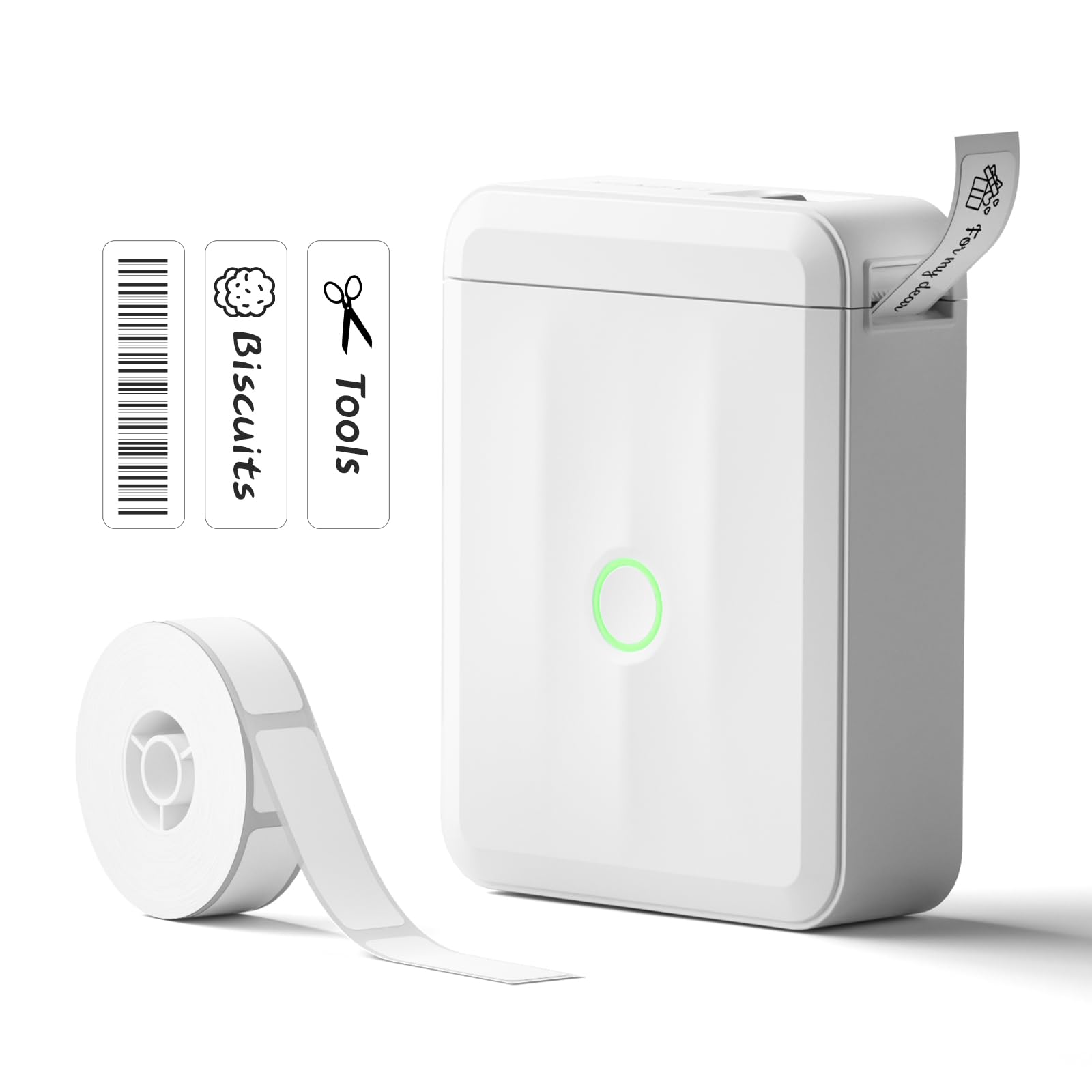
Choose the P12 if ribbon and iron-on media are central to your projects. Consider the D110 if you prefer a rechargeable, pocketable printer for basic organization labels and batch printing.
- The NIIMBOT D110 uses direct thermal printing, supports a variety of label paper including clear and colorful options, and includes a rechargeable battery with USB-C charging.
- Its app supports batch printing, and it is described as monochrome.
- The Phomemo P12 supports both thermal labels and thermal-transfer options such as ribbons and iron-on labels, with phone-app tools for designing and editing.
Desktop Label Printers alternative
6,000+ ratings
Read Amazon ReviewsPhomemo M110
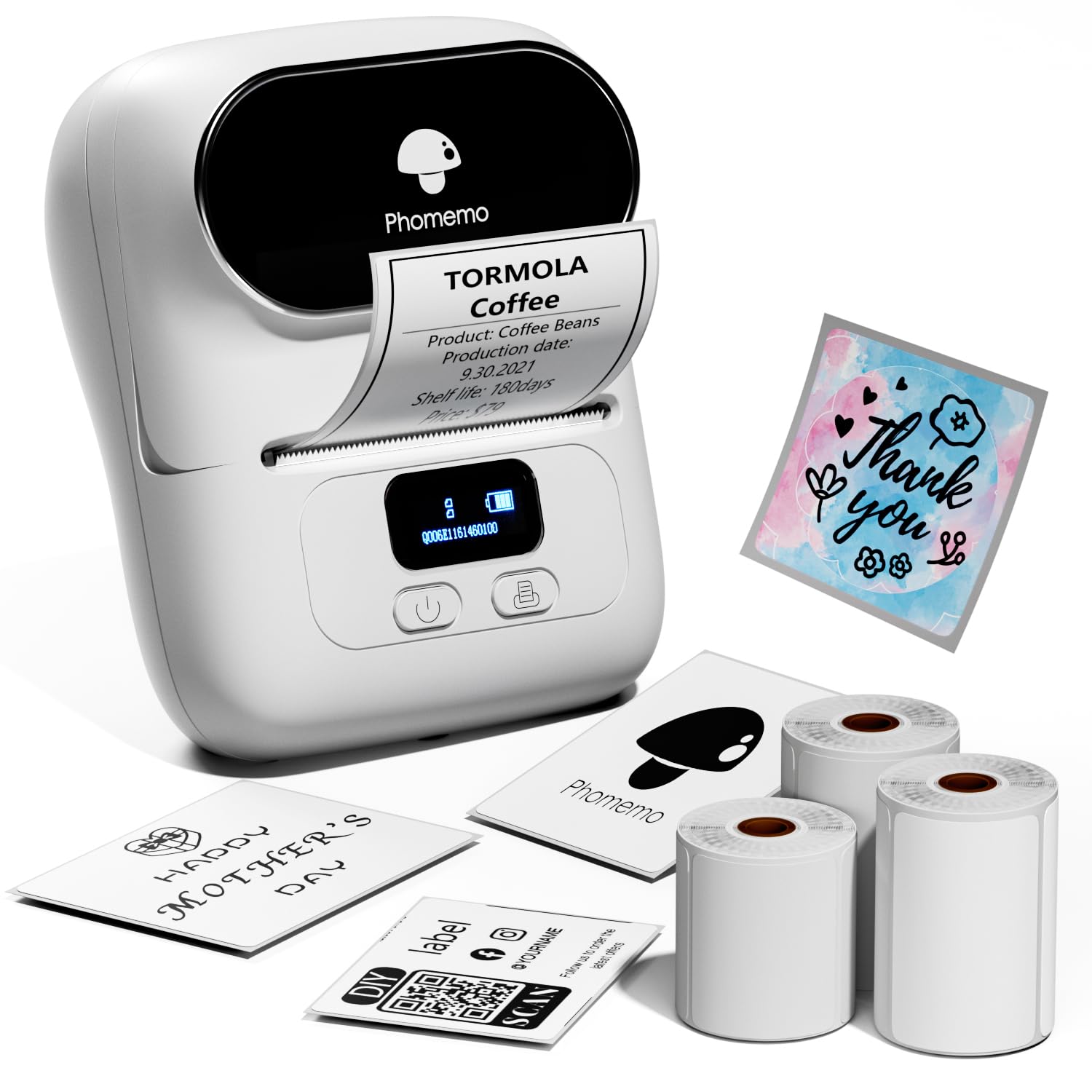
The P12 is the better fit for buyers who want ribbon or iron-on projects in addition to ordinary labels.
The M110 is worth considering for small-business or household jobs that benefit from its described width range and repeated label printing.
- The Phomemo M110 is a monochrome thermal label printer with a stated 20–50 mm label-width range, transparent and pre-cut label support, and an app that supports repeated printing of identical labels.
- The P12 emphasizes everyday and decorative labeling with thermal-transfer ribbon and iron-on media, along with phone-based design tools.
Is Phomemo P12 Worth It?
The Phomemo P12 is worth considering if your labeling needs span everyday organization and creative work. Its support for thermal labels, thermal-transfer ribbons, and iron-on media gives it a useful range, and the app provides substantial design flexibility.
The best fit is a phone-first buyer who will use those media choices and appreciates USB-C or battery power options.
Confirm that the supplies you want match your projects, and remember that portable use with AAA batteries means supplying them separately.
Your review at a glance
2,000+ ratings
Read Amazon ReviewsPhomemo P12
A fit for phone-first organizers and teachers who want everyday labels plus decorative ribbon printing for crafts and gifts.
- Supports thermal labels and thermal-transfer media, including ribbons and iron-on labels.
- Prints at 203 DPI and includes a built-in cutter.
- Connects to iOS and Android phones through Bluetooth and an app.
- The app offers more than 15 languages, over 90 fonts, and over 1,000 borders, plus symbols and templates.