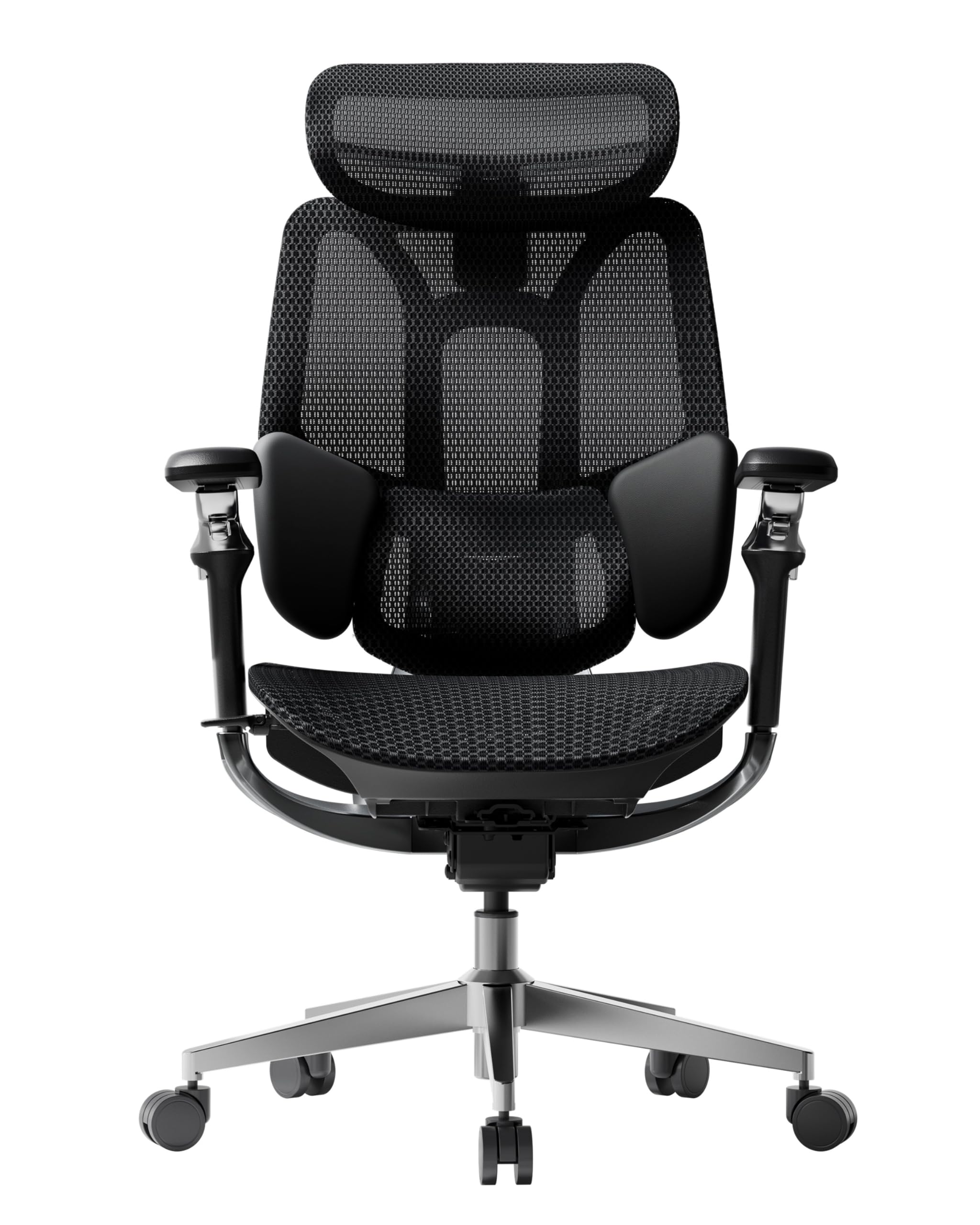
The Hbada E3 Pro is a mesh office chair built around extensive adjustment, including a three-zone lumbar support, a dual-axis headrest, and rotating armrests.
This review hbada e3 pro overview focuses on the fit, recline range, and practical tradeoffs to weigh before choosing it for a home office.
Hbada E3 Pro Review Summary
The quick verdict
1,000+ ratings
Read Amazon ReviewsHbada E3 Pro
A highly adjustable mesh chair for desk workers who want movable lumbar, head, and arm support across work and recline positions.
- Three-zone floating lumbar support uses pivoting side wings with a stated 40-to-80-degree range and 60 mm of vertical adjustment.
- The dual-axis headrest adjusts 70 mm in depth, 40 mm in height, and rotates up to 70 degrees.
- Recline positions are listed at 105, 115, 130, and up to 140 degrees; the gravity-sensing mechanism is designed to adjust tilt tension based on body weight.
- The mesh seat and back use high-elasticity mesh, while the armrests offer dual 360-degree rotation and 39-degree folding.

Pros
- Multiple independent adjustments make it possible to tune the back, seat, neck support, and arm position.
- The pivoting lumbar wings and vertical travel offer more ways to position lower-back contact than a fixed support.
Consider before buying
- Its many adjustment points may take time to set up and compare before the chair feels well matched to your posture.
- The listed 40-pound chair weight may make moving or repositioning it less convenient.
Read the full review summary
The E3 Pro’s central appeal is how many contact points can be tuned: its lumbar support shifts vertically and pivots at the sides, the headrest adjusts in several directions, and the seat depth and backrest height can be changed.
That flexibility gives buyers more ways to align the chair with their body and desk than a basic mesh task chair.
It is aimed at people who alternate between focused work and leaning back, and who expect to spend time dialing in a chair rather than accepting a fixed fit.
The stated height range is broad, but individual comfort still depends on torso, leg, and desk proportions; checking the adjustment ranges against your setup is sensible before purchase.
The buying factors
Hbada E3 Pro Scorecard
Editorial scores reflect listed features and buyer fit; they are not laboratory measurements or customer ratings.
Support adjustability
Lumbar position, backrest height, seat depth, headrest position, and armrest orientation all offer meaningful adjustment.
Lumbar flexibility
The three-zone support combines 60 mm of vertical travel with pivoting side wings, offering options as posture changes.
Head and neck positioning
The dual-axis headrest has depth, height, and rotation adjustment for tailoring contact.
Recline range
Four suggested positions span focused work through a 140-degree recline, with gravity-sensing tilt tension.
Armrest versatility
Dual rotation and folding provide flexibility for different arm positions and desk approaches.
Fit guidance
The 5-foot-1 to 6-foot-5 range is useful guidance, though a broad height range cannot guarantee an individual fit.
Construction credentials
The product specifies an SGS-certified Class 4 gas cylinder, BIFMA compliance, and a 300-pound maximum weight recommendation.
Key Features and Specifications of Hbada E3 Pro
- Three-zone floating lumbar support uses pivoting side wings with a stated 40-to-80-degree range and 60 mm of vertical adjustment.
- The dual-axis headrest adjusts 70 mm in depth, 40 mm in height, and rotates up to 70 degrees.
- Recline positions are listed at 105, 115, 130, and up to 140 degrees; the gravity-sensing mechanism is designed to adjust tilt tension based on body weight.
- The mesh seat and back use high-elasticity mesh, while the armrests offer dual 360-degree rotation and 39-degree folding.
- Fit adjustments include 80 mm of backrest height, 60 mm of lumbar travel, and 50 mm of seat-depth adjustment.
- The suggested user-height range is 5 feet 1 inch to 6 feet 5 inches. The chair has a 300-pound maximum weight recommendation and a listed weight of 40 pounds.
Pros and Cons of Hbada E3 Pro
Pros
- Multiple independent adjustments make it possible to tune the back, seat, neck support, and arm position.
- The pivoting lumbar wings and vertical travel offer more ways to position lower-back contact than a fixed support.
- A recline range up to 140 degrees supports both upright desk work and more relaxed breaks.
- Mesh construction may suit buyers who prefer a breathable chair surface.
Consider before buying
- Its many adjustment points may take time to set up and compare before the chair feels well matched to your posture.
- The listed 40-pound chair weight may make moving or repositioning it less convenient.
- The stated height range is guidance rather than a fit guarantee; desk height, leg length, and torso proportions still matter.
Who Should Buy Hbada E3 Pro?
Good fit
Consider the Hbada E3 Pro if you want an adjustable mesh chair and expect to use different postures during the day.
Its lumbar wings, seat-depth travel, adjustable backrest, and multi-axis headrest address several fit variables at once, which can be useful when a one-position chair feels too limiting.
It is also a plausible choice if you want a chair that can move from upright work toward a deeper recline without changing chairs.
Before buying, compare the 50 mm seat-depth and 80 mm backrest adjustments with your own measurements, and check that the chair’s overall dimensions and 300-pound recommendation suit your space and needs.
Who should skip it
Look elsewhere if you prefer a simple chair with few controls or do not want to spend time tuning lumbar, headrest, and arm positions.
The E3 Pro’s adjustability is its main draw, but it also asks the buyer to make those adjustments.
Skip it if you need a fit confirmed by a specific seat-height range or a particular desk clearance. Those measurements are not included in the supplied product details, so confirm them with the seller before committing.
What the Hbada E3 Pro’s Adjustments Mean at a Desk
Lumbar support for changing posture
The three-zone design combines vertical movement with side wings that pivot.
That can give users more control over where and how the support meets the lower back as they move between leaning forward and sitting back, though the most comfortable setting will depend on the individual.
Headrest and armrest positioning
The headrest’s depth, height, and rotation adjustments let buyers shape neck contact instead of relying on one fixed position.
The armrests’ rotation and folding add flexibility for typing, reaching, or bringing the chair closer to a desk; check that the available desk clearance works with your preferred armrest position.
Using the recline range
The four listed positions create distinct options from a relatively upright work angle to a 140-degree recline.
A gravity-sensing tension mechanism is intended to adapt resistance to body weight, so buyers who switch postures may appreciate the design; the exact feel remains personal, making adjustment and fit important.
Matching the chair to your body and room
The stated height guidance and seat-depth and backrest adjustments offer a useful starting point, while the 40-pound weight and roughly 27.5-inch footprint dimensions help with room planning.
Compare those measurements with your desk, floor space, and body proportions rather than treating the suggested height range as a guarantee.
Alternatives to Hbada E3 Pro
Home Office Desk Chairs alternative
17,000+ ratings
Read Amazon ReviewsSIHOO B300 PRO
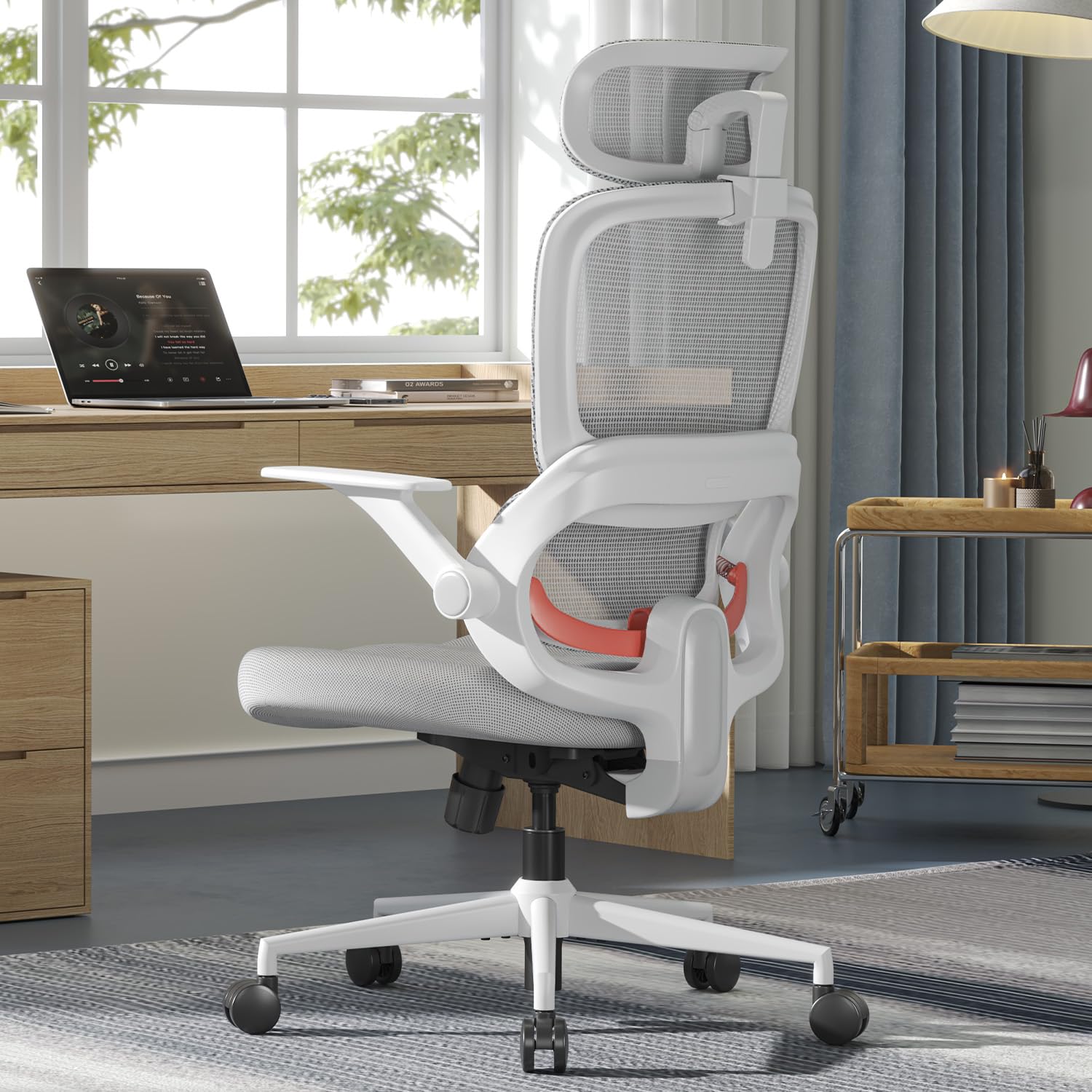
Choose between them by prioritizing the specific adjustment layout: the Hbada offers a deeper stated recline and detailed headrest movement, while the SIHOO emphasizes four-way lumbar adjustment, backrest height tuning, and more armrest directions.
- The SIHOO B300 PRO describes a spring-assisted four-way lumbar system, independently adjustable backrest, adjustable seat depth, weight-sensing recline, and 6D armrests.
- Its listed recline positions are 105, 120, and 135 degrees.
- The Hbada E3 Pro pairs a 60 mm adjustable three-zone lumbar system with a headrest that adjusts in depth, height, and rotation, plus a recline range up to 140 degrees.
Home Office Desk Chairs alternative
17,000+ ratings
Read Amazon ReviewsSIHOO B100 PRO with Footrest
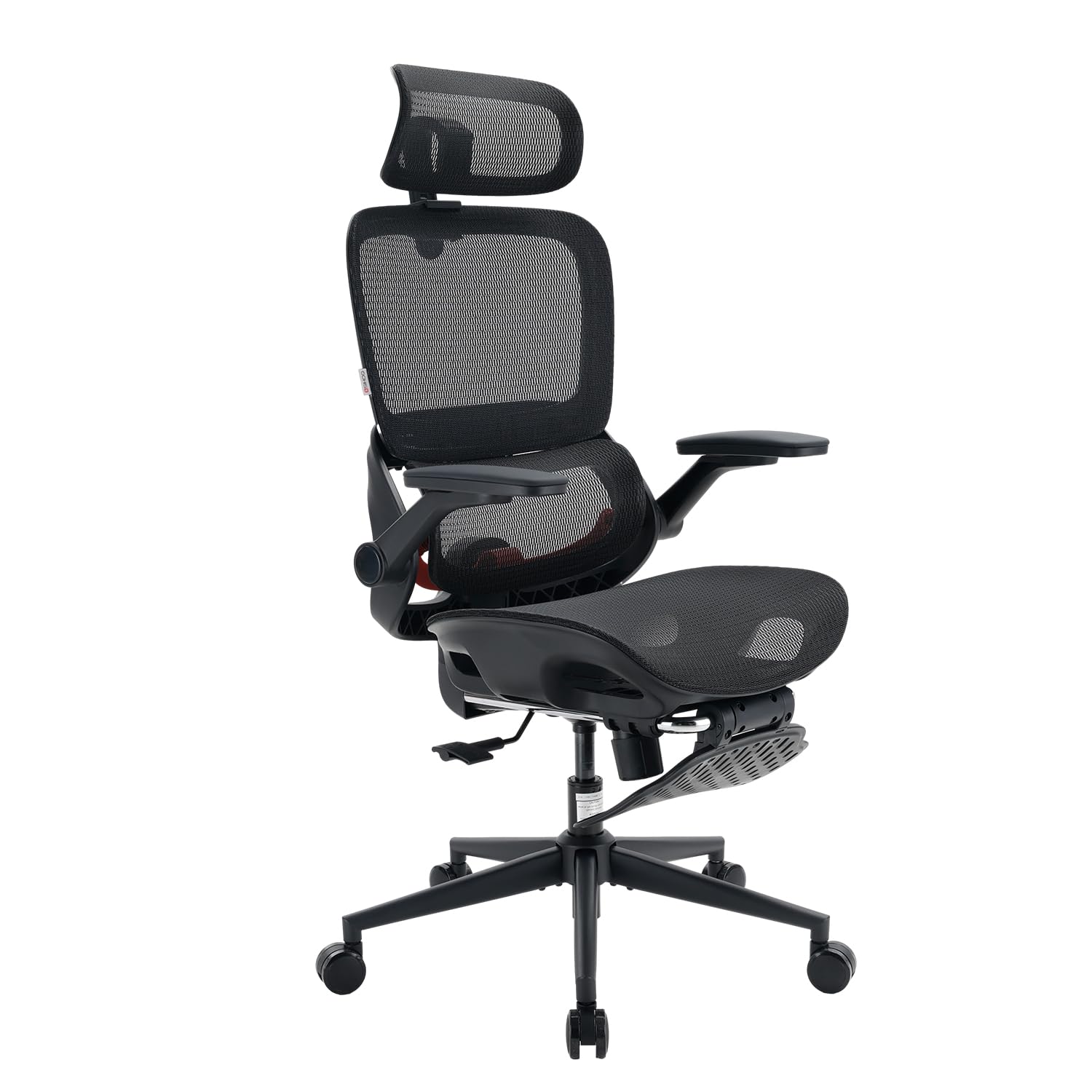
The SIHOO is the more relevant fit if you want a footrest for stretching out during breaks. The Hbada is worth considering when its stated lumbar and headrest adjustment range matters more than having that added lounging feature.
- The SIHOO B100 PRO adds a retractable footrest and describes a widened seat cushion, 3D wide headrest, 4D armrests, and three recline angles up to 135 degrees.
- The Hbada E3 Pro emphasizes adjustable back, lumbar, headrest, and armrest positions, with mesh across the chair and recline up to 140 degrees.
Is Hbada E3 Pro Worth It?
The Hbada E3 Pro is worth considering for buyers who want a mesh office chair with extensive adjustment and a recline option that reaches 140 degrees.
Its strongest case is the combination of movable lumbar support, adjustable backrest and seat depth, and a multi-axis headrest.
Treat the suggested height range as a starting point, and check the chair’s dimensions against your desk and body before deciding.
If you value fit tuning and varied postures, it has a compelling set of features; if you prefer a simpler setup, its many adjustments may be more than you need.
Your review at a glance
1,000+ ratings
Read Amazon ReviewsHbada E3 Pro
A highly adjustable mesh chair for desk workers who want movable lumbar, head, and arm support across work and recline positions.
- Three-zone floating lumbar support uses pivoting side wings with a stated 40-to-80-degree range and 60 mm of vertical adjustment.
- The dual-axis headrest adjusts 70 mm in depth, 40 mm in height, and rotates up to 70 degrees.
- Recline positions are listed at 105, 115, 130, and up to 140 degrees; the gravity-sensing mechanism is designed to adjust tilt tension based on body weight.
- The mesh seat and back use high-elasticity mesh, while the armrests offer dual 360-degree rotation and 39-degree folding.